Bỏ qua điều hướng

GonnaCrash · System Design Game

Design a system. Can you keep it from going down?

Drag servers, caches, queues and databases onto the board, then press Run. Traffic pours in, and wherever something breaks, you find it and save it, without going over budget.

  • Free
  • 100 runs a day
  • English and Vietnamese
  • Computer and phone

Play with a 200Lab account, which also saves your progress.

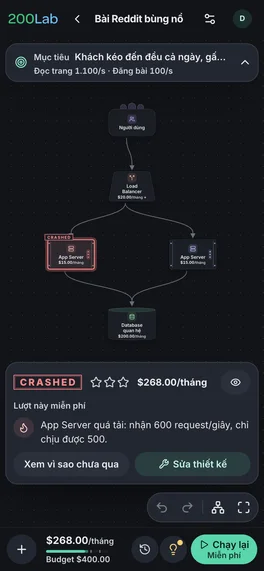
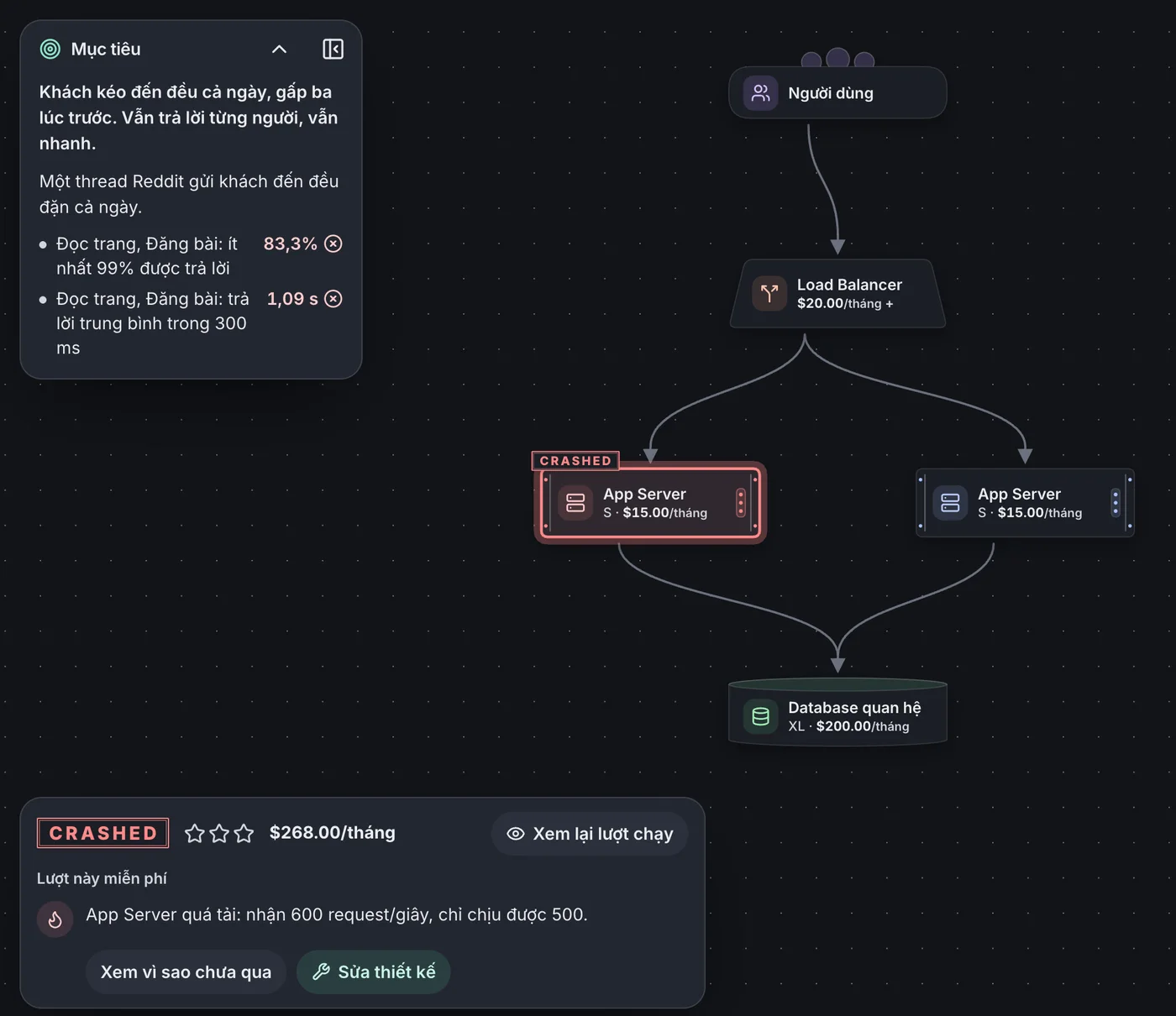
The Reddit post blows up after a run: an App Server stamped CRASHED, the goals panel showing two goals not met, and the result card saying the App Server gets 600 requests a second but handles only 500.
When a run fails, the game points to the first node that went down and says why, in numbers.

Why play

System Design slides are quickly forgotten. Keeping a system up yourself sticks.

  • See it happen

    You see where requests pile up, which node is overloaded first and where you have to shore it up.

  • Things that really happen at work

    Every level is a familiar situation: a Reddit post blows up, a flash sale goes on TV, the primary goes down, a Friday afternoon deploy.

  • Money is limited

    Anyone can add more instances. Staying up while spending little is the hard part, and what you spend decides how many stars you get.

  • Scored by the engine

    On every run, the simulation engine measures the share of requests answered, the latency and the cost. The same design always gets the same result.

How to play

One level, four steps. Build, take the traffic, save the system.

  1. Build the systemThe brief sets the traffic, the goals and the budget. You drag components onto the board, connect them, pick tiers and add instances where you need more.
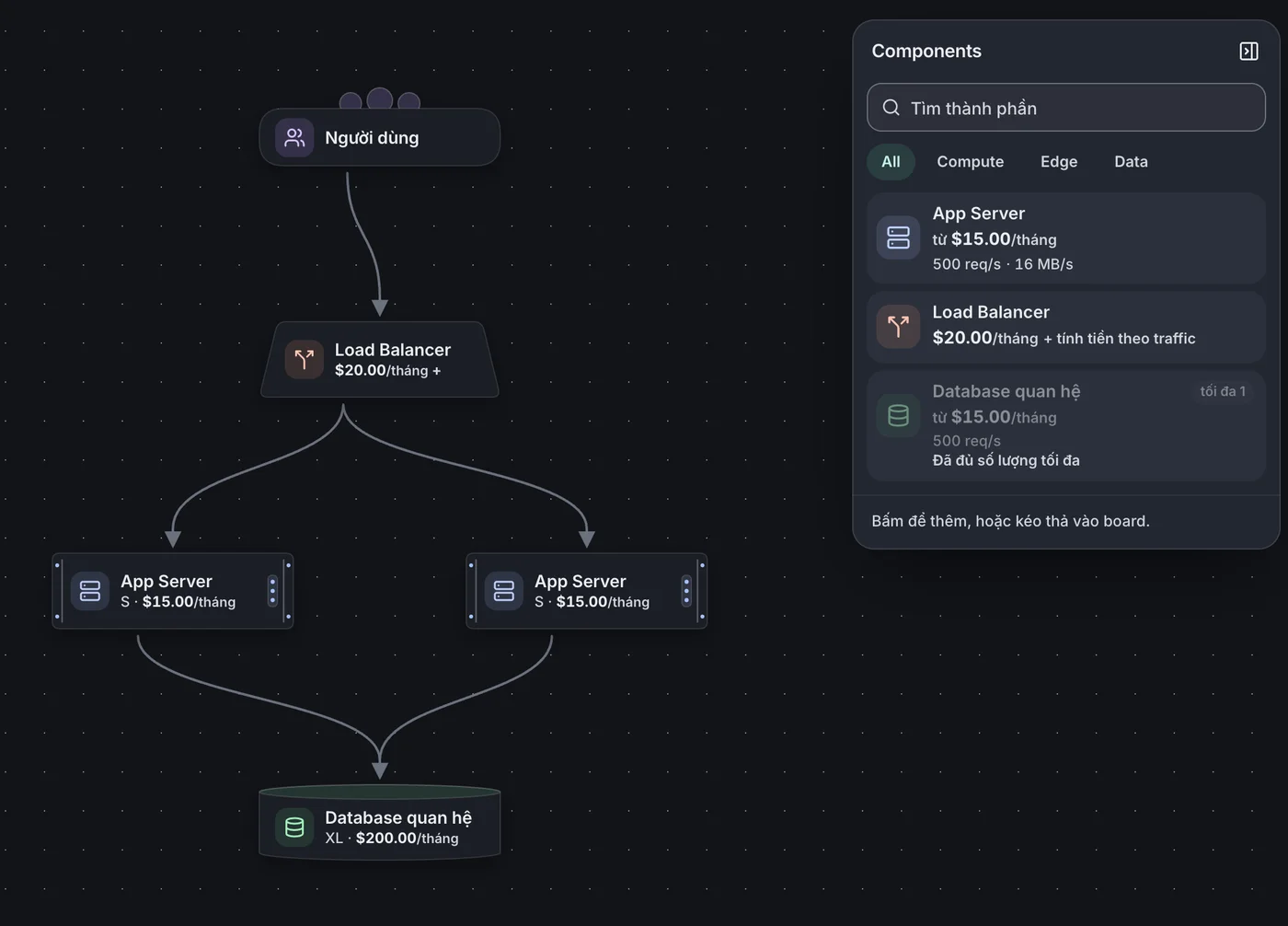
    The Reddit post blows up before a run: Users, a Load Balancer, two App Servers and a Relational DB, with the Components list and its monthly prices on the right.
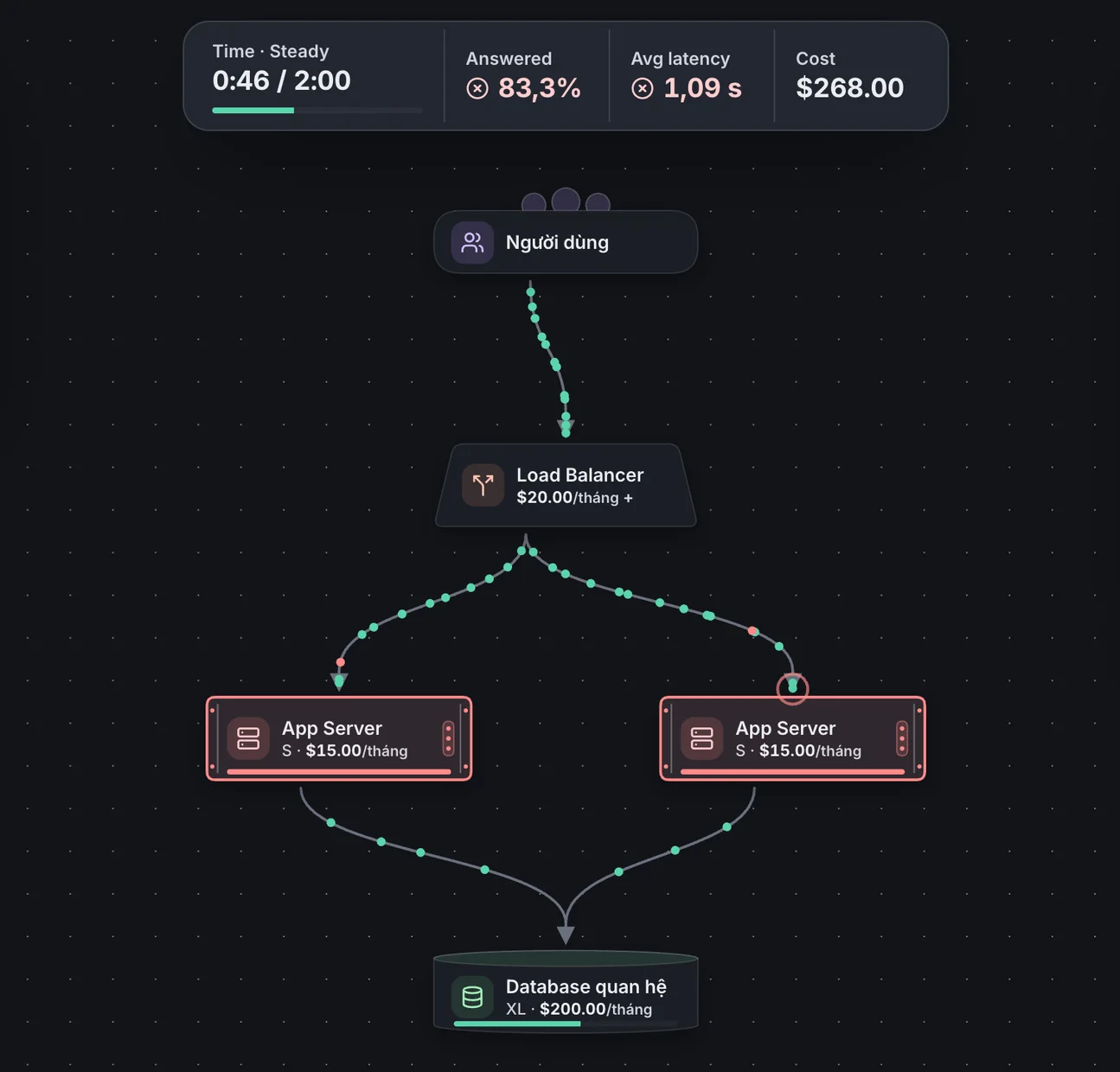
  2. Take the trafficPress Run. Requests cross the board as dots, and any overloaded node turns red.
    A run in progress: request dots travel from Users through the Load Balancer to two App Servers outlined in red because they are overloaded; the numbers above read 83.3% answered, 1.09 s average latency.
  3. Find what brokeIf the run fails, the first node to go down is stamped CRASHED. The game states the reason in numbers and which goals were not met.
    After the run: an App Server stamped CRASHED, the goals panel showing two goals not met, and the result card saying the App Server gets 600 requests a second but handles only 500.
  4. Save it without going over budgetAdd a cache, a queue or a replica, or rewire, then run again. Meet every goal to pass the level. The cheaper, the more stars.
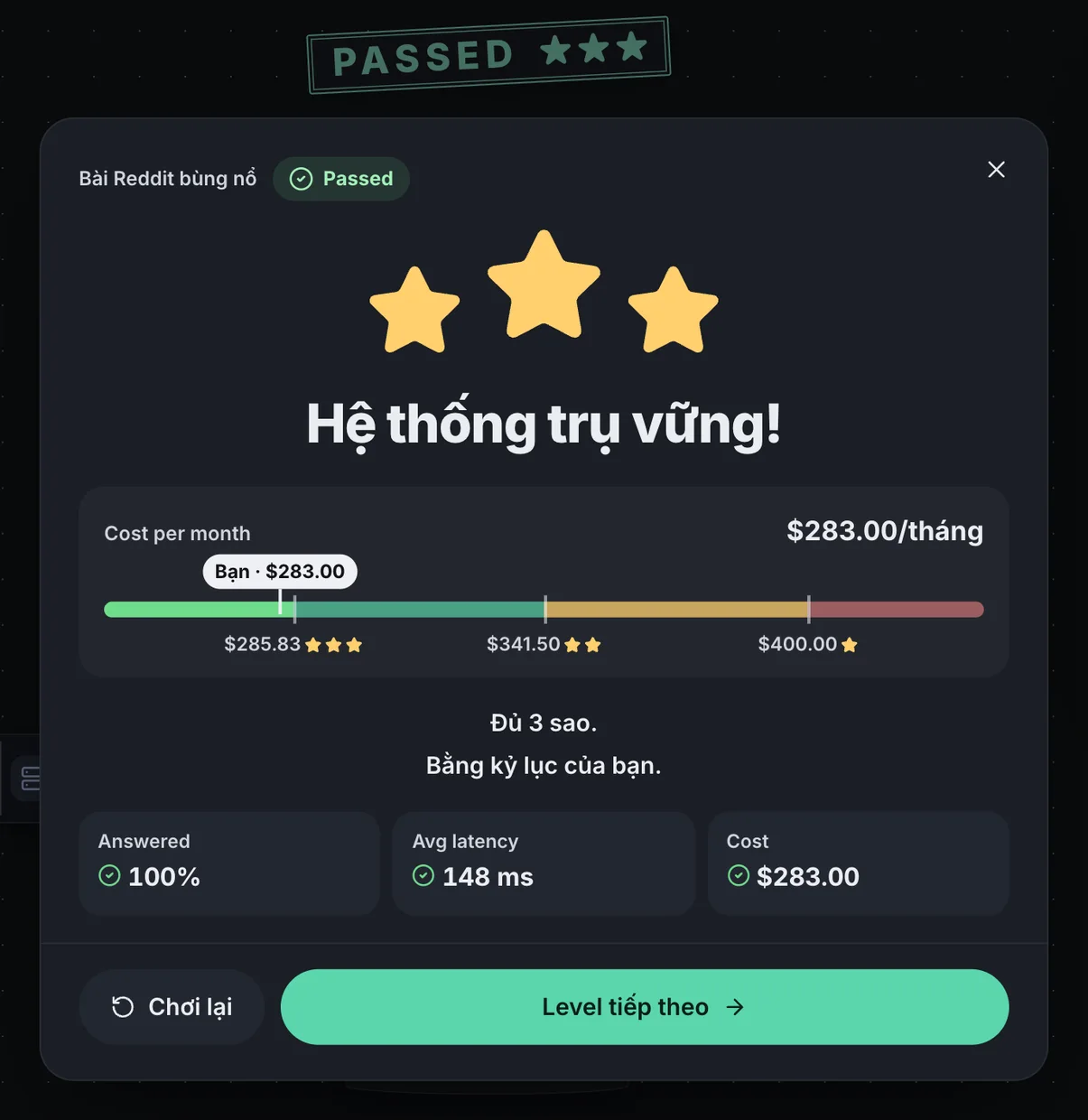
    The Reddit post blows up passed with a PASSED stamp and three stars: the card “The system held!”, a cost of $283.00 a month, under the $285.83 line for three stars.
The Reddit post blows up before a run: Users, a Load Balancer, two App Servers and a Relational DB, with the Components list and its monthly prices on the right.
The Reddit post blows up · Foundations · Chapter 1. Every component has a monthly price, and the total cost always shows in the game's top bar.

4 worlds

From your first few users to agents that run for minutes.

Each world is a story that grows chapter by chapter. The first levels are easy so you can find your feet, and every chapter ends with a Boss. All 4 worlds are open, and you move on with the stars you collect.

Foundations

Open now

One app grows from a handful of users to a Black Friday rush.

Chapter 1 · Suddenly famous

  • The Reddit post blows up
  • The whole country scrolls at lunch
  • Hacker News night

Chapter 2 · New features, new trouble

  • Signup waits on email
  • Flash sale on TV
  • Storm night

Topics: scale up, scale out, cache, CDN, background job, queue, multi-zone, health check, rolling deploy, rate limiting.
High-load systems

Open now

A choking database and traffic in waves: replicas, partitions, sharding, queues, CDN, then multi-region.

Chapter 1 · Saving the database

  • Out of connections
  • One primary, six thousand reads
  • The primary goes down
  • The database meets Black Friday

Chapter 2 · When the traffic hits

  • Retry storm
  • Search hangs, the whole page waits
  • Surviving Black Friday

Topics: connection pool, index, read replica, replication lag, partitioning, sharding, failover, backoff, bulkhead, circuit breaker.

AI apps

Open now

Every token is money: streaming, prompt caching, semantic cache, fallback and RAG.

Chapter 1 · The chatbot goes live

  • A blank screen for 4 seconds
  • Long prompt, long bill
  • Public launch

Chapter 2 · Stop making things up

  • The bot makes up procedures
  • Find the right chunk
  • The budget-burning chatbot

Topics: token cost, streaming, prompt caching, semantic cache, provider fallback, RAG, reranking, model routing, structured output.

Agent Harness

Open now

Agents run for minutes and call real tools: durable workflows, sandboxes, guardrails, quotas and human reviewers.

Chapter 1 · Agents that finish the job

  • Growing context
  • The agent dies midway
  • A hundred tasks at once

Chapter 2 · Keeping agents safe

  • Harmful commands
  • Human approval needed
  • The agent never deletes production

Topics: agent loop cost, context compaction, tool timeout, durable execution, guardrail, least privilege, human in the loop, per-tenant budget.

When complete, the game has 4 worlds and 90 levels. A level with a crown is the chapter's final Boss.

Progress

Stars, titles, badges. Every level you pass is saved.

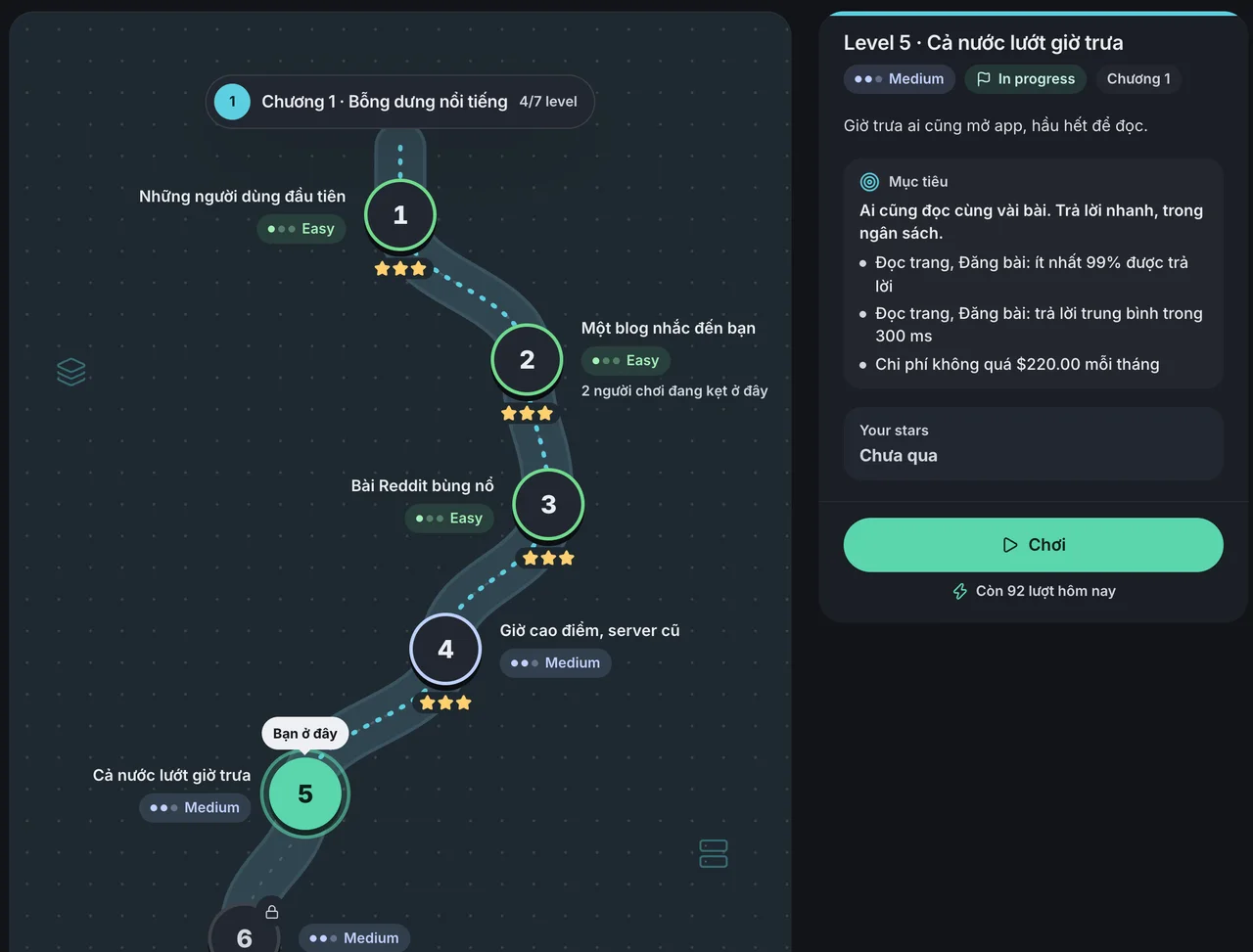
The Foundations world map: the road of levels 1 to 5 with the stars earned, the You are here label on level 5 and the card of The whole country scrolls at lunch on the right.
The world map shows the stars of each level, where you are and which levels have many players stuck.
  • 1 to 3 stars per level

    Meet every goal to pass the level. The lower the cost, the more stars, and every level states the price line for each star.

  • Enough stars open a new world

    The next world opens once you collect 70% of the stars in the worlds before it, a little over 2 stars per level on average. A world that is not open yet still shows its briefs, and an open world never locks again.

  • Titles by total stars

    Seven ranks, named the way the industry names them:

    • Intern
    • Junior Architect
    • Mid-level Architect
    • Senior Architect
    • Staff Architect
    • Principal Architect
    • Distinguished Architect
  • Badges and the leaderboard

    World badges from Bronze to Legend, Boss badges and expert badges by topic, such as cache, database and queue. Badges show in FunZone and can be shared. Every level you pass adds points to the weekly leaderboard.

  • Stuck? Take a hint

    Every run that does not pass opens one more hint step. Viewing a hint never costs stars.

    1. Nudge
    2. Mechanism
    3. The fix
    4. Answer

Skins

Two skins, two languages. Soft is clean, Sketch looks hand-drawn.

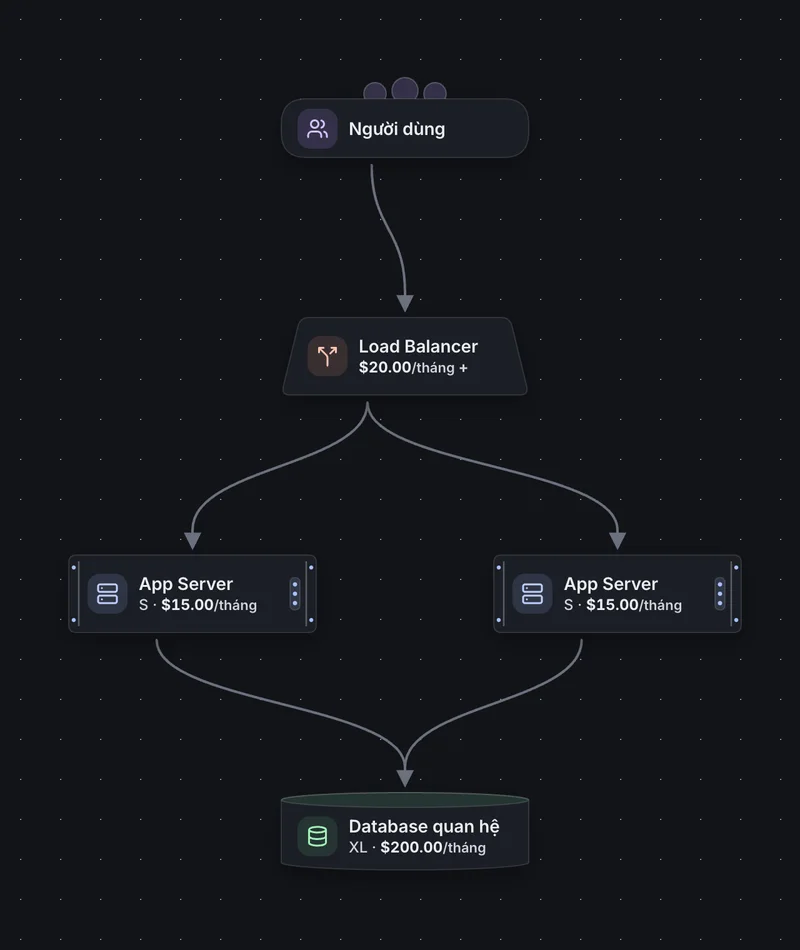
The board of The Reddit post blows up in the Soft skin, dark.
SoftDefaultClean and easy on the eyes. Each node type has its own shape.
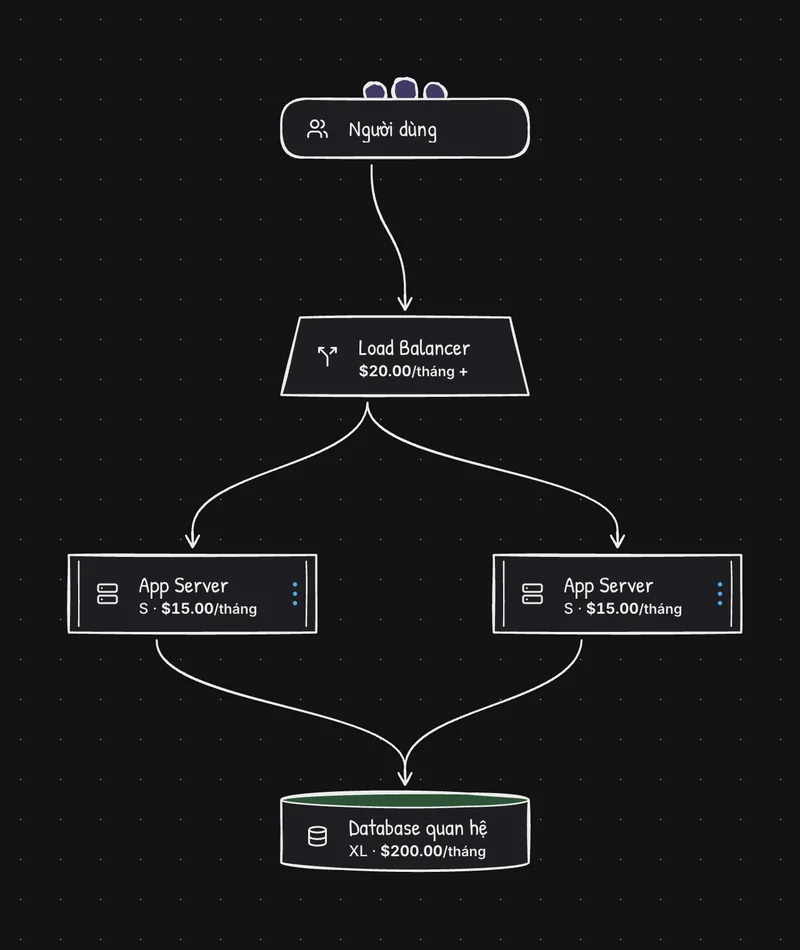
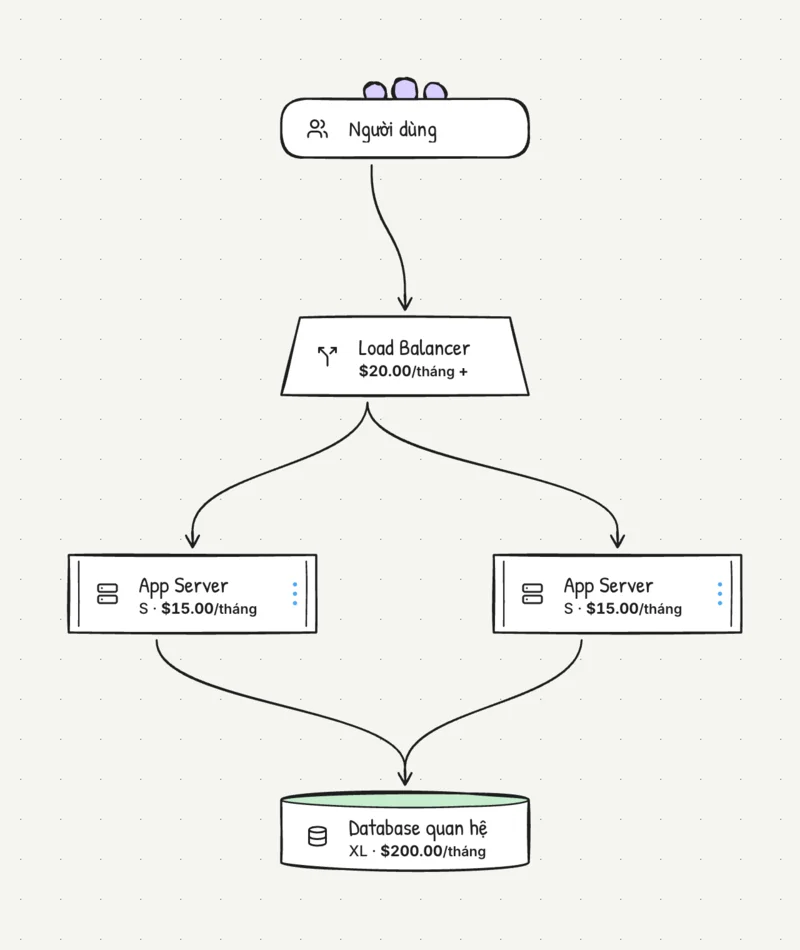
The same board in the Sketch skin, dark, with hand-drawn lines.
SketchHand-drawn lines, like the whiteboard in an interview.
The same board in the Sketch skin, light.
Light or darkEvery skin comes in light and dark. Switch in Settings.

English and Vietnamese

Switch the language any time, right in the game. The name GonnaCrash stays the same in both.

The Reddit post blows up on a phone after a run: an App Server stamped CRASHED, the result card and the Run again button at the bottom of the screen.

Playable on your phone

Small screens get their own layout: the goals fold up at the top, the cost and the Run button sit at the bottom. Levels with many nodes are still easier to build on a computer.

FAQ

Before you press Run

Is GonnaCrash free?

Yes. Every 200Lab account plays for free, with 100 runs a day (counted in Vietnam time). Running a design again that you already ran that day does not use a run.

What do I need to know before playing?

Nothing at all. The first few levels of each world are very easy, enough to get used to dragging, connecting and running. Every brief states its traffic, goals and budget.

Why do I have to sign in?

So your stars, titles, badges and progress are saved to your 200Lab account. To run levels and open hints, your email must be verified. Without that, you can still see the map and the briefs.

How is a run scored?

The simulation engine runs your design with the exact traffic of the brief, then measures the share of requests answered, the average latency and the cost per month. The same design always gets the same result.

Are the prices and capacities in the game real numbers?

No. They are the game's own numbers, chosen so that bottlenecks, lag and retry storms show clearly. They are not any provider's price list or benchmark.

Does viewing a hint cost stars?

No. The level just does not count toward the badges for solving on your own. If you open up to the Answer step, the level counts as only 1 star for the ★★★ badges and the titles.

How many levels are there?

The game has 4 worlds, 13 chapters and 90 levels, and all 4 worlds are open. You move on with the stars you collect.

Can I play on my phone?

Yes. The board has its own layout for phones. Levels with many nodes are easier to build on a computer.

Ready?

How long can your system hold up?

The first level has only a few friends signing up and clicking around. In the levels after it, the traffic is not so gentle.

Free, play with your 200Lab account